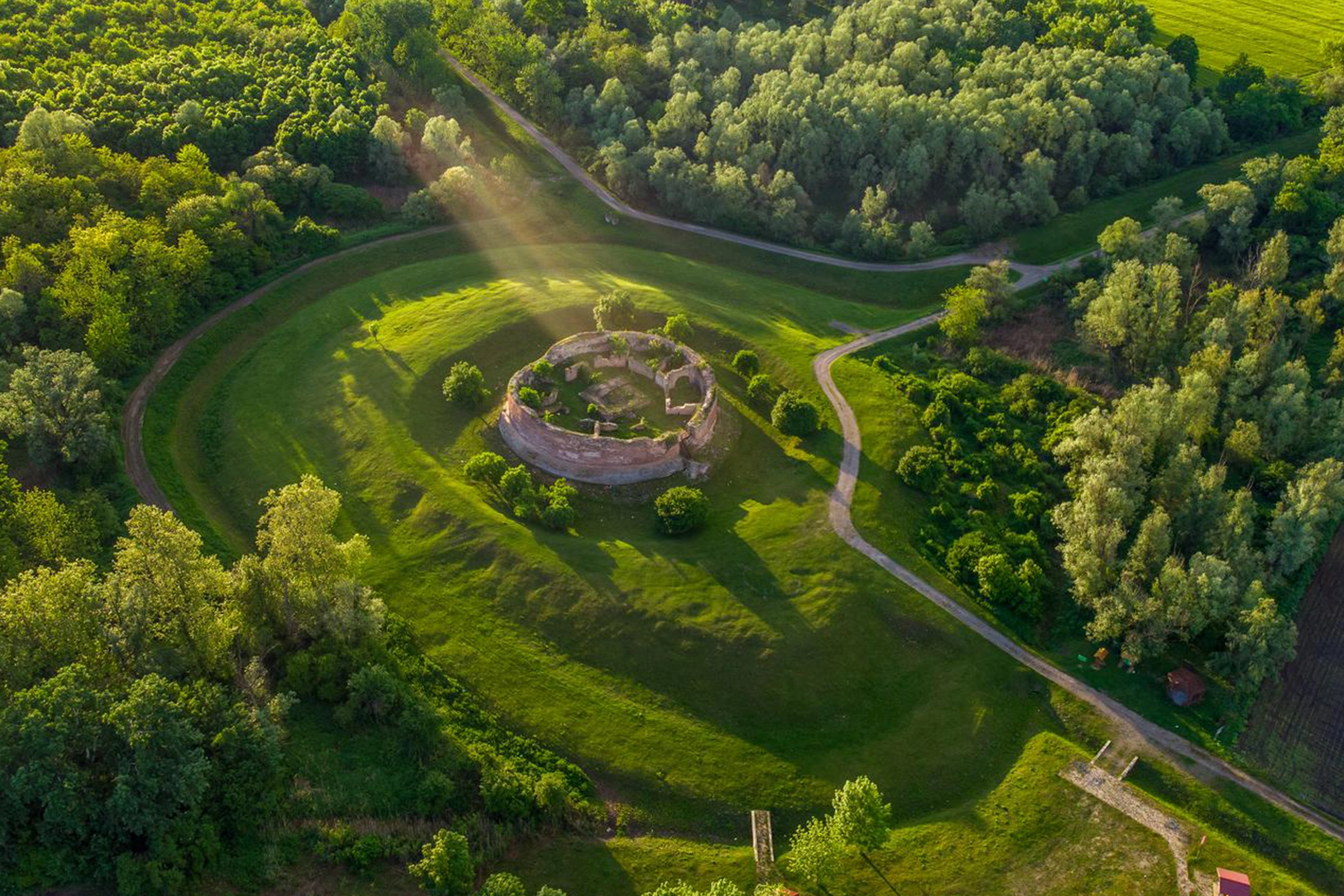
The walls, built by the Korogy family around 1250, stand on the site of a Roman fort, serving as a defense against Tatar invasions. The fortress, a unique example in Croatian regions, was constructed on oak poles arranged in a criss-cross pattern on the marshy ground in the northeast part of the Korogyvar depression, between Čepin, Vuka, Dopsin, Hrastin, and Ernestinovo. Following the Ottoman conquest of Osijek in 1526, Korođgrad was destroyed and abandoned.
A legend surrounds the forgotten city, claiming that during a full moon, one can hear the hissing of snakes and eerie laughter. Folklore tells of Filip Korođ fleeing from Kolođvar because swamp snakes haunted him. Allegedly, he walled up his daughter in a snake tower to guard the moisture he couldn't endure. She transformed into a creature—half girl, half snake—that lured children with songs, strangled them with her long hair, and devoured them. Another legend suggests that the nobleman Franjo Trenk hid gold in the snake tower, which is possibly concealed there today.
REGARDLESS OF YOUR PREFERENCES, SLAVONIA PROVIDES A BROAD SPECTRUM OF EXPERIENCES TO ACCOMMODATE GUESTS WITH VARIED NEEDS AND DESIRES.
Stay in the loop
Subscribe to our newsletter and be the first to find out all the latest news and exclusive offers.